Face Time

Face Time

« Blog | Written by ezfacility | | (0) Comments |

In this digital age, it’s possible to go for days without seeing another person and still be in constant contact with others. Texting, emailing, social media, video-chatting: All which create a level of communication unheard of in previous decades. But guess what? Health club members still prefer in-person interaction with staff than communication via technological device.
A study in the recently published IHRSA Member Retention Report, lays out the details on this topic. Conducted in partnership with The Retention People, IHRSA’s study draws on survey responses from more than 10,000 health and fitness members in the U.K., who answered questions about their exercise habits and membership behavior between July and September 2013. The survey showed that an overwhelming 87 percent of respondents value interactions with fitness staff. The clincher? Less than half—43 percent—of respondents feel they have such interactions.The other clincher? Despite everything you constantly hear about how crucial it is to have an effective social media campaign—to get out there on Facebook, Twitter, and Instagram, to try to speak personably and familiarly with members via those platforms—only 34 percent of respondents said they value social media updates. Almost twice that number—65 percent—said they value receiving emails.
Considering the numbers, it’s worth devising a strategy for increasing face time between staff and members in your own health venue. This goes for sports facilities, too. The nature of the exercise business is interdependence—whether you’re talking gym, niche studio, or batting cages. Members depend on trainers, instructors, front desk folk, and support staff, and vice versa. So anything you can do to foster interdependence is going to result in a happier customer base—which, in the long run, means better retention, more word-of-mouth advertising, four-and-five star ratings on social media, and ultimately more members.
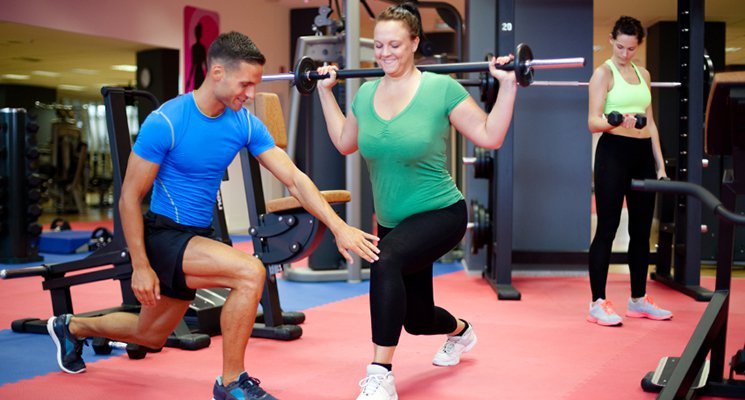
How do you make interactions between staff and members the norm at your facility? Make proactive interactions a requirement for the job: Staff should know, even before they’re hired, that you have high expectations for warm, interpersonal, and in-person communication with members on a daily basis. Have a greeter at the door, and give them a script that includes introducing him or herself by name, welcoming members, shaking their hands, and offering to help them with anything they need. Instruct front-desk staff to smile and to try to learn members’ names. Trainers and class leaders should also learn members’ names and should go out of their way to talk to members. In the weight room and cardio court, and on the ground at sports facilities, they should circulate and check in with members, ask how they’re doing and whether they need anything.
As for out-of-club communications, remember almost twice the number of survey respondents prefer email to social media interaction. Maybe it’s time to step back from your social media activity and refocus on effective emailing; the more personal the better. Consider a gym management software that allows for direct email blasts and the ability to group clients into categories. For example, create an email group called “New members” to track clients who have just signed up. Then, devise an email campaign where your staff sends a “checking in” email once a month for the first few critical months of the client’s membership.
Service of this sort takes your club or sports facility to the next level. If members feel you truly care about them, they’ll be coming back and telling their friends to do the same.

Retaining Members a Month at a Time

Retaining Members a Month at a Time

« Blog | Written by ezfacility | | (1) Comments |

Let’s say you’ve got a prospective member who has shown a lot of interest in your facility. You’ve given her a tour, offered her a free day pass to try the place out, and even had the highest-performing member of your sales team sit down with her for a full twenty minutes, chatting like an old friend and answering a slew of questions. Yet, when it comes time for the prospective to sign on the dotted line, she balks—she just doesn’t feel like she can commit to a year-long membership.
Does this sound like a familiar scenario? With members’ increasingly hectic work lives and a tight economy, it’s happening more and more at gyms, health clubs, and fitness centres around the country. Something else is also happening more and more to directly counteract the phenomenon: Clubs are starting to offer month-to-month membership with greater frequency than ever before.
How, you might ask, could a club stay operational with month-to-month memberships? The better question might be: How could a club stay operational without them? As Geoff Dyer, Founder of AussieFIT in Columbus, Ohio, puts it, “Some 25 percent of all members become inactive within six months of joining a club, and that figure doubles, rising to 50 percent, after one year. Unfortunately, one of the black eyes our industry has earned is its reputation for locking inactive members into long-term retail installment contracts.”
Dyer recently discussed month-to-month memberships on IHRSA’s blog. These options are better, Dyer argues, because they allow the industry to focus as much on member retention as it does on new member acquisition. “If our clients can leave at any time,” he says, “simply by providing written notice, then we’ll likely be much more attentive to their level of satisfaction with our service, programs, and facility upkeep.” That is, allowing for month-to-month memberships will force health clubs and similar facilities to improve the services they provide—the incentive for keeping members happy will increase, and therefore the efforts to do so will increase. As a result, more customers will join. In the end, Dyer says, even if members leave the facility at a faster pace, the outcome can still be a net gain.
Jarod Cogswell, Founder of Enterprise Athlete and President of Fit Academy, Inc., agrees. “The challenge for you,” he says, “is to prove your club’s value on a month-to-month basis, which promotes and produces a higher level of services. It motivates your staff to focus on service, cleanliness, and member retention because every visit counts, and there may not be a second chance.” Cogswell acknowledges, this reality places a lot of pressure on the sales process, because if clients can leave at any time there’s a greater chance you’ll lose them. “You therefore need to be selling at the same or higher rate than the rate of your membership losses,” he says.
Nevertheless, Cogswell believes the month-to-month option can reap rewards for a club. “When people understand that they can leave whenever they like,” he explains, joining your club becomes a comfortable decision—both psychologically and financially—that will tend to drive the volume you need to be profitable.”
Another critical factor to consider is what kind of fitness membership software you are currently using to track membership data. The right club management software will supply you with the ability to access robust reporting as well as the ability to set up auto-billing or auto-pay for membership payments.
So maybe it’s time to consider how you could implement month-to-month memberships at your own facility. The key to success with month-to-month is providing your members with the incentive to return, and instituting such a plan could force you to revisit some of your systems and processes. This presents short-term challenges, but the long-term benefits could greatly offset those challenges.

Creating Classes for the Cool Kids

Creating Classes for the Cool Kids

« Blog | Written by ezfacility | | (0) Comments |

When you think of exercise classes for the 8- to 13-year-old set, you probably think “ballet” and “karate.” You probably leave instruction in those fields to the kinds of niche studios that have been catering to children’s physical activities for decades. But things are changing in the world of kids’ calisthenics. Classes are no longer limited to the traditional ballet and karate. Now, kids are engaging in workouts that have fueled adult fitness for a while; such as cycling, Zumba, and CrossFit. Those workouts are happening not at kids’ boutiques, but in health clubs, gyms, and fitness outlets that are used to serve an adult population almost exclusively. The New York Times recently published an article about the phenomenon (and you know something is becoming a trend if the New York Times is reporting on it). The article features several gyms of various sizes and orientations that have launched classes created for adults, which were then subsequently adapted to meet the needs of smaller, more energetic types. Exceed Physical Culture, in New York City, is one of them.

Since 2012, the gym has offered adult classes involving jump ropes, monkey bars, and kettlebells. Soon after opening, owner Catherine Rocco discovered that parents seeking after-school activities for their kids were bringing them in and expecting to sign up. Rocco and her co-owner responded to that demand by creating a class for ages 8 to 13. Very soon after, they found themselves offering five classes per week for children only, and another for families on the weekends. AKT in Motion is the second company that offers classes just for kids. Based in New York, the dance cardio studio launched a regular eight-week session for children this past spring. Capitalizing partly on shrinking physical education time at school and on those late-afternoon hours when gyms and similar venues tend to get quiet, companies like these are finding kids eager for physical outlets that are not necessarily team or competition focused.

They’re finding parents eager for activities that keep their children happy, busy, and physically fit. That last point is key: In an era when obesity among children and teens is at an all-time high, parents want to get kids hooked on exercise early. According to the Times article, many parents take that a step further by enrolling their kids in classes at a gym. Parents are trying to convey a sense that getting a membership at a place where you can work out regularly is simply a normal part of life.

This is good news for gyms, health clubs, fitness centres, and other alike. Children’s classes pull in no less revenue than adults’ classes! In fact, they create a whole new revenue stream because they engage a separate segment of the population. Also, they offer venues the chance to create loyalty among a clientele that might develop those early gym-going habits their parents are hoping for and then stick around for a long time. The upshot? If you haven’t yet opened your doors to young ones, it’s time to sit down and start strategizing about how you’re going to do so. Start small, like the way Exceed Physical Culture did: Launch just one class, but have a plan for expanding. Because chances are, you’ll need to do so pretty quickly.

Time To Partner Up

Time To Partner Up

« Blog | Written by ezfacility | | (1) Comments |

Recently in this space, I talked about rewards programs—how much I love them, how popular they’re with consumers in general, and how well they can work for the sports and fitness industries. Now I want to take on something related and equally powerful: partnership programs. Do you partner up with local businesses? If not, it’s time to consider how doing so might benefit you, your clientele, and your whole community.

As with rewards programs, cultivating partnerships with local businesses is a great way to boost member loyalty by increasing the value of what you have to offer. It works like this: Your gym, sports venue, training center, fitness facility, or health club. Partners up with local businesses that agree to offer discounts when your members present their membership cards. In return, you offer those businesses something: maybe the chance to advertise to your clientele, maybe free memberships for their employees, maybe discounts at your facility for their customers.

Club Business International offers a couple of examples to show how such a program benefits all parties involved. Gainesville Health and Fitness Centres (GHFC), with three clubs in Gainesville, Florida, has been operating its Members Savings Program for about forty years. All 27,000 GHFC members have the option of presenting their membership cards to more than 100 local firms that provide discounts to the members. Debra Lee, the company’s director of marketing, explains that when Joe Cirulli,owner and president, was brainstorming ways to help customers cut the cost of their gym memberships back in the 1970s, he landed on creating business partnerships. “His idea,” Lee told Club Business International, “was to identify local businesses that [club members] used on a regular basis, and to offer discounts that would help offset the cost of membership.” In return, GHFC subtly advertises partner businesses to club members.

Miramont Lifestyle Fitness, in Fort Collins, Colorado, is another club with a list of partner vendors. Partners provide discounts to Miramont’s members, along with special discounts that occur quarterly, to coincide with the club’s member appreciation days. In return, Miramont provides club passes for partners’ employees and advertises their businesses via newsletters, TV , andQR codes.

When do you let members know about the partnership opportunities? The answer, when they’re trying to decide whether or not to sign up. That’s when the added value that these programs bring to your facility will kick in—prospective members will realize they’re getting so much more than just a gym membership. As for existing members, they’ll never want to leave.

Create such a program by first seeking out local businesses likely to serve a clientele similar to yours: health food shops, hair salons, spas, sporting goods stores. Make sure your top sales person is the one approaching potential partners. You want someone who conveys a real sense of being invested in the program and in your facility, someone who can really make the value of the program clear. Finally, hammer out the details. This includes, what exactly will the partnership consist of, how will you benefit each other, give the program a name and start advertising it widely on social media, via email blasts, and in-house. Just make sure you’re ready to launch it right away, because your members will jump at the chance to sign up.

Helping Your Clients Through Injuries

Helping Your Clients Through Injuries

« Blog | Written by ezfacility | | (0) Comments |

The other day, a friend of mine told me an interesting story. She’s no athlete, but for 2014 she made a New Year’s resolution to get in shape. She starting running three days a week and she joined a gym. Against all odds, she stuck with her resolution, and ten months into it she looks great and says she feels better than she ever has. Except for her ankle. About three months after she launched her new workout routine, my friend twisted her ankle, and it’s never been quite the same.
I asked her how she manages to stay committed to an exercise program even with an injury. Wasn’t she tempted just to quit? This is where the interesting story comes in: She was tempted to quit, my friend said. She was on the verge of doing so. But the staff at her gym encouraged and supported her so much that she felt she couldn’t.
Shocking, isn’t it? But it shouldn’t be. This is how it should work. After my friend left the ER months and months ago, she headed straight to her gym. She had reserved a spot in a spin class for that morning, and she couldn’t imagine not going through with the class (even though her doctor had told her to keep her foot up and rest). By the time she reached the front desk, though, my friend broke down—her ankle clearly hurt too much for a spin class that day. My friend feared it hurt too much to allow for exercise ever again, and, through tears, told the front desk staff she wanted to cancel her membership. The receptionist came around from behind the desk and gave my friend a hug. She listened to the problem, and then walked her down the hall to the office of the gym’s Fitness Concierge.
The concierge told her to relax. “She said it was okay to miss a class. She said it was no big deal. Then she made me tea and handed me a chocolate chip cookie. She claimed it was a healthy version of the standard recipe, but she said it with a wink, and then I realized that it’s okay to miss class for a day, or even a week. It’s okay to eat a cookie if it makes you feel better. Because of her words and kindness, a great rush of relief went through me and I could think clearly again. Somehow, I needed her permission to not be a perfect exerciser.” The concierge also pulled over a chair so my friend could put her foot up, told her she could stay there in her office for as long as she liked, and started cracking jokes. “Soon she had me laughing about people falling over during aerobics classes,” my friend said. She squeezed her in for a consultation with a personal trainer who had experience dealing with injuries and with a physical therapist. The trainer gave her tips for adapting her workout. The physical therapist showed her simple stretches she could do to speed up her recovery.
I love this story. I love that my friend’s gym offered immediate, personalized comfort and care—and that it was true for everyone from the front desk staff to the physical therapist. I actually called her gym and asked for a tour, even though I’m fond of my own facility; I’m considering switching now. How are things at your facility? Does your staff know how to help clients handle injuries? Can they reassure an injured client and help him or her figure out how to push ahead with workout goals safely? Can they offer something we don’t usually expect from places of business—a bit of mothering? These things could go a long way toward boosting member retention and gaining new clients. Maybe it’s time to gather everyone together for a lesson on sympathetic responses.

Supporting Your Female Clients

Supporting Your Female Clients

« Blog | Written by ezfacility | | (0) Comments |

You’ve probably heard the saying before: “Women hold up half the sky.” But, in fact, they may hold up most of your fitness facility. Research suggests that women drive 70 to 80 percent of consumer spending worldwide. Moreover, women, much more than men, engage in word-of-mouth publicity—they talk about their experiences with businesses, products, and service-providers, and, in their social circles. They hold a great deal of influence over the way others choose to spend money. Given that women also purchase fitness-related products and services more often than men do, what does all this mean for your health club?
It means it’s time to design ad campaigns better geared toward them. Here are a few tips for doing so.
First, put away the pink paint, lacy towels, and flower arrangements. The way to show women that other women are comfortable using your gym is not to advertise their presence through pretty embellishments but to highlight the fact of their presence. Using posters, brochures, and social media postings that show women looking serious about their workouts and happy to be in your facility will suggest that you cater to their needs. Supporting breast cancer awareness and making sure members and potential members know you do shows that women’s issues are important to you. Offering—and heavily advertising—childcare programs demonstrates that your club understands the logistics many women must juggle.
Loading your marketing materials with images of women is not enough, however. You must also create real programming for women. Do you offer women-only high-intensity interval training classes, extra women-only swim times, or self-defense classes for women? Do you offer co-ed basketball leagues or squash tournaments? Make your programming for women solid, and then talk it up as much as possible. Highlight your offerings on social media. Send emails. Offer prospective clients chances to take part for free, and invite current members to bring a friend at no charge.
On that note, make sure you’re advertising in establishments and publications that cater to women. Is there a clothing boutique or nail salon near the gym? Ask if you can hang flyers announcing a new women-only cycling class. Partner with local businesswomen’s associations and request that they include mention of your facility in their next newsletter. If you have branches nationally, consider buying ad space in magazines like Self, Women’s World, and Women’s Health.
Finally, engage the advice of the experts. Ask the women in your club what kinds of services do they want, then do your best to provide those services, and let everyone know that you’re doing so. Don’t forget to go to the official experts, too. Some marketing consultants focus exclusively on strategies for marketing to women; they can point out weaknesses in your existing campaign and show you how to polish it up for the demographic. Plenty of books and articles on the subject exist too. I’m not suggesting, by the way, that you forget all about the men—but chances are that if the women are happy, the men will be too.

Major Sports Tourism Complex Planned for Orlando Area

« News | Written by ezfacility | | (0) Comments |

Seminole County, Florida, is planning the construction of a major sports complex aimed at attracting youth athletic tournaments. The $27-million complex, designed to stretch over 102 acres, will include a baseball stadium and fields for soccer, lacrosse, football, and softball.
The county sits close to Disney World and other large, popular theme parks, and has been looking for a way to increase local tourism. A study conducted by Seminole County suggested that one tournament could draw as many as 1,900 people. According to the study, 17 events in one year could generate about $19 million for the local economy and add more than a dozen jobs. After five years, and with additional tournaments, the income generated locally would rise to $25 million, county officials said. The figure represents spending by visitors at nearby hotels and restaurants, retail stores, and other businesses.
Eric WIllin, COO, of EZFacility, a sports facility management software developer in Woodbury, New York, noted that city and county governments around the country are looking into establishing similar sports complexes as a way to generate revenue and support local business. “Youth sports travel has become a huge industry,” he said. “Families like the idea of traveling with a purpose, and if that purpose is deepening or challenging their children’s skills — or just allowing their kids to have as much fun as possible — then all the better. Simply put, it’s become a multibillion-dollar industry.” According to the latest figures compiled by the National Association of Sports Commissions, an Ohio-based group that works with tournament organizers and facilities, families spent an estimated $7.68 billion traveling with their children to youth-sports tournaments in the United States in 2011.
The proposed Seminole County facility would include 15 lighted fields with synthetic turf, suitable for baseball, softball, soccer, and lacrosse. The complex would also include a pavilion, walking paths, a playground, and a food-truck court. In addition to catering to athletic tourism, county officials noted, the complex would open its doors to local residents as well, allowing them use of the fields and other facility amenities.

Professor Wins Grant to Study Effectiveness of HIIT vs. Army Workouts

« News | Written by ezfacility | | (0) Comments |

A grant of more than $2.52 million has been awarded to an assistant professor of kinesiology at Kansas State University, who aims to compare the effects of high-intensity interval training (HIIT) with usual Army physical readiness training among active-duty military personnel.
The professor, Katie Heinrich, received the grant from the National Institutes of Health’s National Institute of Diabetes and Digestive and Kidney Diseases. Her study, she said in a press release from the university, could shed light on the issue of obesity in the military because of the potential HIIT offers for promoting fat loss through increased post-exercise fat metabolism.
“A study that looks at the effects of HIIT in comparison with a rigorous exercise program like that of the U.S. military is deeply significant for the fitness industry,” said Eric Willin, COO of EZFacility, a fitness center management software developer in Woodbury, New York. “Given the popularity of HIIT-focused programs, an understanding of how they compare with Army-style exercising could help gym, health club, and fitness center owners better understand how, where, and how much to incorporate and promote HIIT in their facilities.”
According to the university’s pres release, Heinrich and her team will work with the Command and General Staff College and Combined Arms Center at Fort Leavenworth, Kansas.

Some Changes In Credit Card Processing

« Blog | Written by ezfacility | | (0) Comments |

As of October 17th, 2014 Visa and MasterCard will be enforcing revised standards in the handling of declined transactions for card not present activity.

MasterCard’s requirement is intended to discourage repeated and excessive resubmissions by merchants of certain types of previously-declined transactions, which can burden issuer processors’ systems. Generally, such practices occur with preauthorized recurring or installment transactions. Merchants are permitted to resubmit such transactions, with limitations, if initially declined; however, transactions that are declined as lost, stolen, capture (pickup) card, or invalid will never be eligible for a subsequent issuer approval and repeated resubmissions can be costly for issuers.

Enforcement of MasterCard’s requirement will occur by means of issuers submitting non-compliance complaints to MasterCard in response to abusive authorization practices of this nature. MasterCard will not systematically enforce, and the rule is not intended to obligate a merchant to monitor and inhibit cardholder-initiated, standalone purchases from being submitted for authorization based on prior activity associated with the account number.

The risk of being fined by MasterCard is present, if MasterCard is advised that a merchant continues to resubmit previously-declined transaction and does so in an abusive manner.

What is changing?

The revised standards dictate that in the event of a declined transaction, merchants are no longer permitted to resubmit transactions that have declined for any of the following decline reasons:

  • Pickup Card
  • Invalid Account Number
  • No Such Issuer
  • Pickup Card – Lost Card
  • Pickup Card – Stolen Card
  • Expired Card

Please Note: If an updated expiration date or account number is obtained from the customer, the transaction may be resubmitted for authorization using the updated account information.

Enforcement

Enforcement will consist of issuers submitting non-compliance complaints to Visa and MasterCard in response to abusive authorization practices that do not adhere to the revised standards. It is important to note that MasterCard will not systematically enforce, and the rule is not intended to obligate a merchant to monitor and inhibit cardholder-initiated, standalone purchases from being submitted for authorization.

Please Note: Not adhering to the revised standards could result in fines from credit card companies, starting at $1,000.

Healthier Planet, Healthier You

Healthier Planet, Healthier You

« Blog | Written by ezfacility | | (0) Comments |

I’ve talked about the Green Sports Resource Directory in this space before. Created by the U.S. Environmental Protection Agency, it’s a collection of online resources designed to help sports facilities, leagues, and college and university teams reduce their carbon footprints. With inspiring success stories and links to organizations devoted to helping sports-oriented businesses make environmentally sound decisions, the website illustrates the benefits of greening sports. It also links to tools that can help facilities and teams track and control their energy consumption, like EPA’s Energy Star Portfolio manager, and to lists of products that perform well and are cost efficient—while also being safer for the environment.
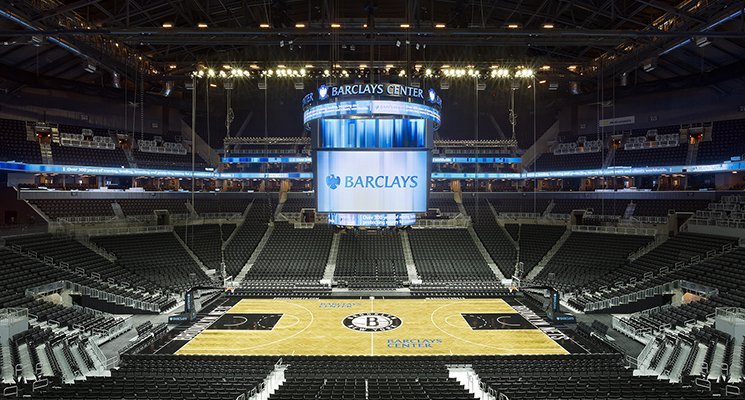
Bottom line: It’s a great resource, it can save you money, and it helps make a better planet. Already, sports outfits across the country are making a commitment to protect the health of employees and clients and to improve the environment. The Seattle Mariners have used energy efficiency techniques to reduce their electricity consumption by over 90 percent—and to reduce energy costs by $50,000 per year. Brooklyn’s Barclay’s Center earned a LEED Silver certification by the U.S. Green Building council last year, and it has challenged fans to “be green” by using public transit, recycling, and reducing paper waste associated with tickets. In West Columbia, South Carolina, a former dump and landfill site was transformed into a recreational area, with a mini-golf course, a driving range, a practice golf course, a ball park, and—I love this detail—a recycling center.
Chances are your facility, league, or team already has taken some steps toward becoming greener. You reuse, reduce, and recycle; you advise your employees not to print out emails unnecessarily, and you communicate with your clientele virtually more than on paper; you choose machines that use energy efficiently. But probably you can take your efforts further. Can you invest in solar energy? (I know a horseback-riding training center in upstate New York with state-of-the-art stables, a vast indoor arena, 34 acres of beautiful land, and a big, old-fashioned farmhouse, where, because of solar panels on the roof, the electricity bill comes to $19 per month.) Can you use products that conserve energy? Can you clean without harmful chemicals? Can you boost efforts to get everyone in your facility—managers, employees, fans, members, and clients alike—wasting less and conserving more?
Moreover, can you effectively advertise your efforts? Because in addition to saving money and making the world safer, operating a greener business can attract the attention and loyalty of consumers whose concern about climate change and environmental health lead them to make decisions based on green practices. Want new members, customers, or clients? Reduce your energy consumption and let everyone know you’ve done so.