different workouts

Attract New Members with More Creative Classes

« Blog | Written by ezfacility | | (0) Comments |

I have a dear old friend who’s always been a bit on the chubby side. In high school, he preferred sci-fi films and Dungeons and Dragons to sports or, really, any form of exercise. You get the picture. I hadn’t seen him for years and years and then unexpectedly ran into him the other day — and what a shock. I didn’t recognize him at all. He’s in such great shape that he puts Rich Froning, Jr. to shame. Okay, well maybe not Rich Froning, Jr., but he’s muscular and trim now, fitter than he’s ever been in his life. “How did you do it?” I asked. “Star Wars,” he said. Huh?

Turns out he’s been taking fitness classes inspired by the great epic film series. Several times a week, he duels with a lightsaber in classes at a local gym that incorporate marching maneuvers (a la Stormtroopers), one-handed cartwheels (the other hand holding the lightsaber), and handstands of the sort Yoda makes Luke Skywalker do (not one-handed, though). He learned about the classes through a friend of his who knew how much he hated — but needed — exercise. “My friend thought I might be willing to try it because of the Star Wars theme,” he told me. “I have to admit, I was skeptical at first, but I knew I had to do something, and this sounded like the only exercise I’d ever heard of that I was even remotely interested in. Now, I want to go every single day. I never knew exercise could be so creative and fun.”

Why don’t more people know how creative and fun it can be, I started wondering. Maybe health clubs, fitness studios, and gyms need to work harder to incorporate creativity and fun. What better way to entice non-exercisers off the couch and onto the exercise floor than to give them a way to forget that they’re exercising? That, said my friend, is ultimately what did it for him. “I’d get out there and start getting into it, and before I knew it, I was fighting with a lightsaber — I wasn’t working out. Forgetting that I was in the gym and just letting myself go all out with role-playing made it possible.”

A number of health clubs around the country are starting to launch Star Wars classes, and they’re benefitting by pulling in new members from a population they weren’t able to reach before. A recent article in California’s Orange County Register mentions a gym in Dallas that “developed a workout that included the Stromtrooper march and Wookiee sandbag slams.” The article also describes Star Wars-themed summer camps and sports facilities that are helping to reduce the U.S.’s childhood obesity epidemic by getting otherwise inactive kids interested in lightsaber-fights and related workouts. Appealing to these new populations, those gyms, camps, and facilities are boosting their membership numbers and, by making workouts fun, probably increasing the likelihood of retaining the new members they sign up.

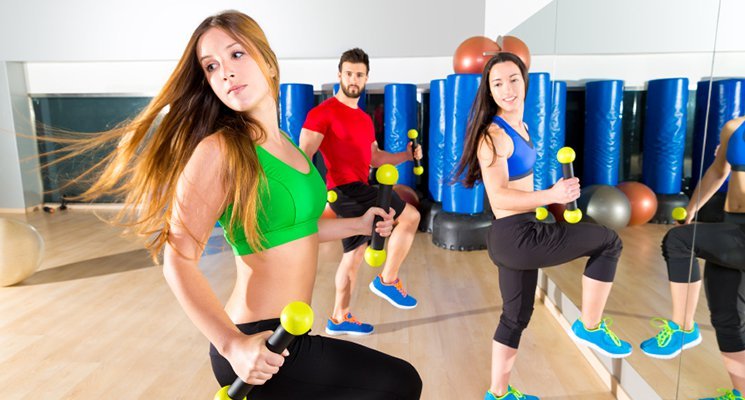
If cult film-inspired exercise doesn’t seem like the right thing for your facility, don’t worry: There are other ways you can kick up your creativity factor. The key, again, is to design workouts that help people forget they’re working out. One trend that’s been catching on lately is 305 Fitness, classes that feel more like a night out at a dance club than like a class: live DJs spin records, strobe lights and coloured lasers flash, and instructors incorporate high-intensity dance moves. Another is planting in an exercise studio props that approximate the feel of an outdoor park and letting members race around parkour-style. There are also always good, old-fashioned dance classes. Take the time to consider the ways in which your facility might appeal to new audiences with fun, unique, and creative classes. If you do, your audience will find you. Or, as Yoda might put it, the force will be with you.

World’s Largest Ice Facility to Open in the Bronx

« News | Written by ezfacility | | (0) Comments |

A new indoor ice center slated to open in the Bronx, New York, in 2017 will generate more than $1.7 billion in economic benefits to the surrounding community, according to a study recently released by the center’s developer. If built according to plans, the 750,000-square-foot facility, known as the Kingsbridge National Ice Center, will become the largest of its kind, hosting nine indoor ice rinks and a giant community center.
The facility will occupy an existing building, the Kingsbridge Armory, which has stood vacant since 1996. Desiree Pilgrim-Hunter, spokesperson for the Kingsbridge Armory Redevelopment Alliance, called the ice center “a game changer” for the neighborhood. She said, “We’re on the cusp of creating a new economy for the Northwest Bronx.” “We’ve seen new athletic facilities completely transform the communities in which they’re established,” said Chris Fernandez, Customer Success Specialist, of EZFacility, a sports facility management software developer in Woodbury, New York. “Jobs, tourism, sports teams, fans, nearby restaurants and hotels — all of these things follow in the wake of new sports facilities, and they can have a huge positive impact on the local area.”
When plans for the ice center were drawn up, the Kingsbridge Armory Redevelopment Alliance signed an agreement requiring at least 51 percent of employees to be Bronx residents, and stipulating that employees be paid at least $10 per hour with benefits or $11.50 without. In addition, the community will receive 1.5 percent of the ice center’s annual revenues, or $276 million over the 99-year lease period. Also, the residents of the surrounding area will have free access to the 50,000-square-foot community center that will occupy the rink.

World’s Largest Ice Facility to Open in the Bronx

« News | Written by ezfacility | | (0) Comments |

A new indoor ice center slated to open in the Bronx, New York, in 2017 will generate more than $1.7 billion in economic benefits to the surrounding community, according to a study recently released by the center’s developer. If built according to plans, the 750,000-square-foot facility, known as the Kingsbridge National Ice Center, will become the largest of its kind, hosting nine indoor ice rinks and a giant community center.
The facility will occupy an existing building, the Kingsbridge Armory, which has stood vacant since 1996. Desiree Pilgrim-Hunter, spokesperson for the Kingsbridge Armory Redevelopment Alliance, called the ice center “a game changer” for the neighborhood. She said, “We’re on the cusp of creating a new economy for the Northwest Bronx.”
“We’ve seen new athletic facilities completely transform the communities in which they’re established,” said Danielle Comeau of EZFacility, a sports facility management software developer in Woodbury, New York. “Jobs, tourism, sports teams, fans, nearby restaurants and hotels — all of these things follow in the wake of new sports facilities, and they can have a huge positive impact on the local area.”
When plans for the ice center were drawn up, the Kingsbridge Armory Redevelopment Alliance signed an agreement requiring at least 51 percent of employees to be Bronx residents, and stipulating that employees be paid at least $10 per hour with benefits or $11.50 without. In addition, the community will receive 1.5 percent of the ice center’s annual revenues, or $276 million over the 99-year lease period. Also, the residents of the surrounding area will have free access to the 50,000-square-foot community center that will occupy the rink.

Brand identity

Your Mission: To Think About Mission Statements

« Blog | Written by ezfacility | | (0) Comments |

Recently, a post on IHRSA’s blog gave me pause. It features Fred Hoffman, owner of Fitness Resources in France, and it focuses on the relationship between personal trainers and member retention. What struck me is that Hoffman talked only a little about that relationship; what he emphasized is the importance of mission statements. As he put it, “Policies, procedures, performance standards—all should be based on [a] company’s mission statement and represent its core values.”

This got me thinking. Really, what is a mission statement? Hoffman argues that “whatever takes place in a club is a reflection of the company and its management.” In this conception, a mission statement is like a mirror you hold up to your club to make sure that it looks the way you want it to look. If you glance into the mirror and what you see doesn’t match your ideas about what you should see, then you know it’s time to make changes. If you don’t have the mission statement—don’t have the mirror—then you have nothing against which to compare your reality, nothing by which to judge how close your reality is to meeting your ideal. How then do you know what to change? How do you assess the “whatever takes place in your club” to ensure that it is a true reflection of your company and its management?

So, as Hoffman says, “If you have a mission statement, revisit it, and, if you don’t, draft and fine-tune one.” Your mission statement should do several things:

• Provide an explanation of what your club does

• Include a description of your corporate culture

• Incorporate examples to show how your corporate culture manifests itself

• Enumerate your club’s core values

• Explain how the core values are used to obtain desired results for members, staff, suppliers, and the business as a whole

Thus, it’s not enough to state your goals. As they say in the journalism business, “specific is terrific”: You need to explicitly state what you are, what you do, what activities and attitudes define you. You need to provide concrete examples, avoiding abstract language that ultimately doesn’t mean much. And you need to pull it all together to show how you accomplish everything that you want to accomplish.

How then do you use the mission statement, in practical terms? During your hiring process, share it with potential employees. Make sure that they understand it. If it doesn’t make sense to them, or if they can’t see how it forms the basis for everything the club does and every decision management makes, they might not be the right employees. If they do understand it, make sure they see how the role they would play within the club aligns with it. To use the personal-trainer-and-retention example, if one of the core values your mission statement outlines is member retention, make very clear how the responsibilities set forth in the job description relate to member retention. Show how each core value jibes with the various job responsibilities described.

Finally, make sure employees never forget the mission statement. There’s a reason why grade school children used to have to recite the Pledge of Allegiance every morning. You don’t have to make your employees recite the mission statement daily, but do post it prominently in a staff lounge. Do bring it up during staff meetings. Do discuss it with employees when you meet with them one on one. If your employees see how important the mission statement is to you, they’ll believe how important it is to them.

Keeping Your Facility Germ-Free-- And Your Members Happy

Keeping Your Facility Germ-Free—and Your Members Happy

« Blog | Written by ezfacility | | (0) Comments |

In 2008, IHRSA published the Guide to Health Cleanliness, which highlighted the startling results of a survey: More than 90 percent of survey participants said they were more apt to renew their membership with a health club facility if the facility was clean. That might not be so surprising, but here’s the shocking part: Only slightly more than half said they would renew if the facility was not clean.

Keep in mind that this was six years ago, before the Ebola scare, before enterovirus D68, before super-strong strains of the flu were floating around. With these threats around us, and with media hype that frequently blows such threats out of proportion, it’s little wonder that health club and sports facility users are even more cautious than they used to be. Add to that the fact that we’re smack in the middle of cold season, and you’ve got potentially a lot of skittish members on your hands who want assurance that their health is protected when they’re using your facility.

What can you do to reassure them? First of all, make sure you’ve got a plan for keeping your place as clean as possible. Review your cleanliness policies and procedures. Are they up to date? Do they follow best practices? Are they generally in keeping with standards set by the Centres for Disease Controls (for example, wash hands with soap and water for 20 seconds or rub an alcohol-based sanitizer on hands for 15 seconds before and after workouts; shower after workouts; avoid walking barefoot across exercise floors and locker rooms)?

After you’ve polished up your policies, start thinking about your staff. Do they know the policies? Do they know what to do if they’re sick (best practices say they should stay home)? Do they know what tasks they should take responsibility for in order to help maintain the highest standard of cleanliness possible? Organize a mandatory staff meeting solely around these issues and make sure everyone is on board. Do frequent walkthroughs with a cleanliness checklist to make sure rules are being adhered to.

Finally, communicate directly and explicitly with your members about cleanliness in your facility. Send out an email explaining your concerns during the season, highlighting the steps your club is taking to stay as germ-free as possible, and asking members to remain aware of ways in which they can help contribute to a cleaner club environment. List specific tips, like the Centres for Disease Control standards shown above. A post on IHRSA’s blog describes an email Newtown Athletic Club recently sent to its members. Linda Mitchell, Newtown Athletic’s director of PR and Marketing, devised a letter with the subject line “Healthy Facilities Initiative.” She and her team carefully worded the letter, avoiding making any promises but being sure to explain procedures. They assured members that maintaining a clean facility is a top priority. Then they described new procedures being implemented and outlined member responsibilities. Mitchell told IHRSA that the email had an unheard-of 35 percent open rate—to her a clear indication that members were hungry for information about facility cleanliness.

Ultimately, you want to make your members feel secure, and you want them to know you welcome their questions and can answer them satisfactorily. Over and above that, you want to keep your facility as germ-free as possible — for your members’ sake, but also for your own and your staff’s. Provide a safe environment, clearly communicate the details about how you’ve done so, and keep everyone feeling strong and healthy all winter long.

Transform Your Space—And Maybe Even Your Identity

Transform Your Space—And Maybe Even Your Identity

« Blog | Written by ezfacility | | (0) Comments |

So, you own an ice arena and you worry about lost revenue in the summer. Or, you run an indoor soccer facility and you can’t justify having all soccer, all the time. Or, sometimes you just wish your basketball court had turf. Well, put your mind at ease, because it can. According to an article in Athletic Business magazine, there’s been a recent boom in portable synthetic turf, and new, updated models have hit the market just in the past six months. As the article puts it, “The turf is temporary by design, boasting an ability to be rolled up, removed and later reapplied, or…stacked and stored for future reconnection.”

Portable and temporary turf—it’s a game changer. Manufacturers like AstroTurf, FieldTurf, Ecore, and others report to Athletic Business that demand for the product has exploded. The business director at one such company, Sporturf, said, “It’s one of the fastest-growing segments of our business… The upfront cost to purchase this turf is minimal compared to the cost of [a] facility just sitting there empty.”

Many different kinds of facilities are employing the product these days, from Houston’s Reliant Stadium—which removes natural grass on which the pro teams play to lay down synthetic turf for high school games—to independent personal training spaces, where, facility owners might want some weight-room flooring on one side and some turf on the other. The Edward Jones Dome in St. Louis, Lucas Oil Stadium in Indianapolis, the Milwaukee Wave’s Major Arena Football League—all these are big-time facilities that regularly use temporary turf to change their floor surface depending on the changing needs of various players.

Interested in portable turf for your own facility but not sure where to begin? Keep in mind that the product comes in two basic forms: rolls and panels. Rolls can vary in width, with some of them measuring 15 feet wide and 200 feet long—great for creating an instant football field. The gigantic ones can be massive enough to require heavy machinery during installation and removal (but even with the cost of machinery factored in, the product saves money in the long run). Panels tend to range in size from seven and a half square feet to 32 square feet, depending on the manufacturer. These can be installed and uninstalled relatively easily, with just a couple of employees—or players—handling even the largest ones. Some temporary turf is held in place with heavy-duty Velcro. Other versions fit together with peg-in-hole fasteners or puzzle-like interlocking edges.

On the whole, manufacturers see portable turf as a way for smaller venues to maximise programming. Consider how such a product might help you maximise your own programming. With a temporary turf surface, could you hold drills for sports teams you’ve never before imagined hosting? Could you keep your facility running for an entire season during which you usually shut your doors? Could you expand your offerings and thereby revolutionize your entire brand identity? With a product that has the power to transform both your physical space and your customers’ ideas about you, it’s worth considering exactly how you might make use of it.

Rethinking Reception Areas — in Real Life and Online

Rethinking Reception Areas—in Real Life & Online

« Blog | Written by ezfacility | | (0) Comments |

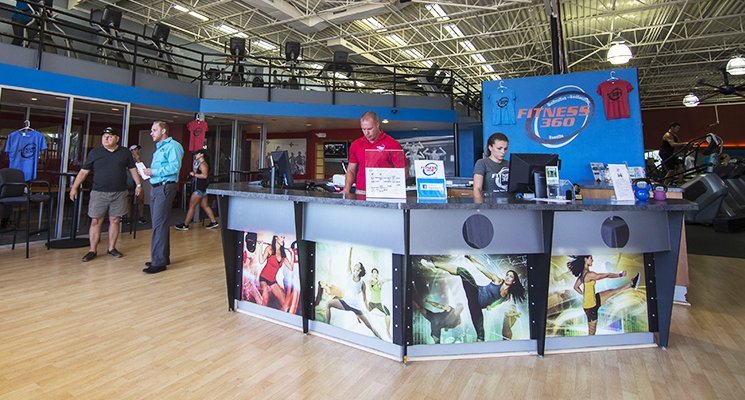
We all know the cliché: First impressions matter. Some social scientists have suggested that we size up new people, places, and things within thirty seconds of first encountering them, making decisions about them then and there. Of course, first impressions often are proven wrong — but sometimes, depending on the content of a given impression or the person forming it, there’s no chance to prove it wrong. Fact is, clichés are clichés for a reason: They tend to touch on some kind of truth. In the fitness and sports facility industries in particular, first impressions really do matter. Potential members might decide in a split second whether to sign up with your facility or not.

What gives someone a first impression of your organization? Your reception area, of course. Or, I should say, your reception areas, because in this day and age you likely have two: a virtual one and a bricks-and-mortar one. If you want to sell memberships effectively, you have to consider both carefully.

Let’s think first about the old-fashioned one, the bricks-and-mortar reception area. Remember, this space represents a transition from the outside world — that is, the world that contains a potential member’s stressors, responsibilities, and aggravations — to your facility. How do you want people who walk through your doors to experience that transition? Chances are, you want them intuitively and immediately to grasp that they’re entering a sanctuary, a safe harbor that will hold the stressors, responsibilities, and aggravations at bay. The more they feel that, the more likely they are to keep coming back. In other words, you want your reception area, that first-impression space, to do the work of fulfilling what are likely two of your facility’s main goals: signing up new members and retaining existing ones.

How do you accomplish this? First, ask yourself how warm, welcoming, and calming your reception area is. Is it a carefully designed space, with colours, lighting, fixtures, and signage that let people know you want them there, you’re friendly, and they can relax? Maybe you have a fountain, plants, yellow lighting angled just so. At the same time, is the space energizing enough to help people get into a workout mindset — a splash of bright colour on one wall, say, an image that suggests intensity and power? Does it look generic, as if a person standing there could be anywhere, or does it look like it could be only one place in the world: your facility, reflecting your identity? Do your front desk employees smile? Do they know members by name? (Of course, needless to say, the space should be uncluttered and impeccably clean.)

If you answered no to any of these questions, it’s probably time for an overhaul. An architect or interior designer can help you get started. One step you can take right away is researching current design trends for fitness and sports facility reception areas — and then being sure to avoid them. Part of the first impression you want to aim to create is the sense that your place is different, in a category all its own.

Now, what about your virtual reception area, a.k.a. your website homepage? In the old days, of course, this wasn’t something a gym owner or manager had to worry about. But the fact is that nowadays, people form an impression of your facility before ever stepping foot into it, and they do that by looking you up online. Take a good, hard look at your homepage ask yourself some questions. Some of the questions are similar to the ones you want to ask about your physical space: Is it warm? Is it welcoming? Does it set you apart from other facilities? But you also want to consider the following: Does the page load quickly? Does it avoid being overly busy? Does it reflect and reinforce your facility’s brand identity? Does it efficiently answer questions people are likely to ask, or provide obvious links to answers?

A final key point to keep in mind: Online impressions are formed not only through your facility’s webpage, but also via reviews on Google, Yelp, personal blogs, and other such pages. If you’re concerned about potentially negative impressions these kinds of sites might leave, or if you just have no idea how to begin approaching the issue, consider hiring an online reputation expert, someone who combs through existing pages about your business and strategizes ways to emphasize the good stuff.

Row class

Creating Space for New Fitness Fads

« Blog | Written by ezfacility | | (0) Comments |

When I was in college, there were two stationary bikes in the gym’s cardio room. One of them had a tiny little screen that allowed you to set the number of miles you wanted to log or the amount of time you wanted to exercise; it also had a primitive graphic, like something from an Atari 2600 video game, that let you visualize your course: up “hills”, down “valleys”. That was the high-tech bike. The other one had a wheel that looked kind of like a giant fan. There were no screens or graphic-based interfaces attached to it; you just got on and pedaled.

I haven’t seen my college gym in, ahem, a very long time, but, given the pressure on colleges and universities to supercharge their fitness and recreation offerings, I imagine it’s a much more polished (and much more visited) place than it was back in the day. Two stationary bikes, one of which apparently was built in 1897? There’s no way they’d get away with that anymore. What with the growing popularity of spin classes in the past decade, I imagine the college rec center has a whole room dedicated to sleek-looking stationary bikes now, and the bikes are probably equipped with the latest digital enhancements that give their riders a full dossier of personal health data.

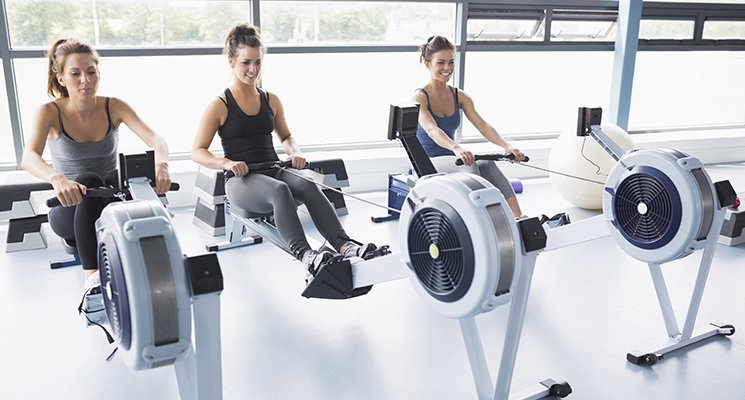
My point is, fitness centres have to keep up with changing fads, and this is true whether they’re on college campuses, independently owned, or part of a corporate wellness program. They have to do aerobics when people want aerobics, host Zumba classes when there’s excitement about Zumba, and so on. All well and good, but how exactly should a fitness center keep on top of changing trends when those trends involve deep-pocket investments in big, expensive pieces of equipment? Athletic Business magazine posted an interesting article on this topic a couple months ago, focusing on the growing popularity of rowing machines. One fitness industry veteran interviewed for the article put it this way: “Rowing will never be group cycling, but it is gaining its place with more hard-core fitness enthusiasts.” CrossFit aficionados have brought it nearly into the mainstream, and more and more gyms and fitness centres are increasing their stock of rowing machines, even lining them up and creating classes à la spinning classes.

But what if you’re a small outfit that can’t afford a whole roomful of new rowing machines? What if you don’t have the space for many large pieces of new equipment? How do you give your clientele the most up-to-date, exciting workout experience — the one they’ve been hearing so much about from friends and through advertisements, the one being touted at a rival fitness center down the street — if you don’t immediately have the resources for that kind of development?

As Athletic Business says, “To be sure, fitness facility owners needn’t run out and invest in a fleet of rowers, but nor should they continue to assume their current mix of cardio equipment is adequate to meet their members’ expectations.” That is, you have to focus on finding a balance. Then you have to make a plan for growth. Maybe you can start out by making space for one or two rowers. Keep close tabs on them: Make a note every time someone uses them. Note when they are empty for long stretches of time. Observe whether a line of people waiting to use them frequently forms.

Survey your clients to find out whether they’ve used them, when they did, for how long, and how they liked the experience. Ask whether they would sign up for a rowing class if one were offered. Set up a temporary class with a very limited enrollment (even just three or five would be okay). How is it received? What would participants change? Do they want more?

A business can’t change its programs and equipment the way teenagers change clothes — adoption of new fads should happen slowly, after testing, focus-group research, data-gathering, and trial-and-error. After you’re convinced that a fad is here to stay, and after you’ve conducted adequate research among your user base, then you can take the plunge and buy the equipment. Just make sure that when you do you’re keeping half an eye on the next emerging trend, because you’ll want to start researching that one too.

Oh, one last thing. After writing this I got curious and called my alma mater’s athletic center. I was told they recently ordered four new rowing machines!

Mud Runs and Obstacle Races: Capitalizing on Rising Recreational Fitness Trends

« News | Written by ezfacility | | (0) Comments |

In recent years, the fitness industry has seen a surge in popularity of mud-runs and obstacle course races. Exercise enthusiasts are drawn in by the unique experiences, sense of accomplishment and camaraderie with fellow competitors at these events. With the rise of big name competitions such as The Warrior Dash, Spartan Race and Tough Mudder (just to name a few), clubs and gyms need to assume many of their clients will want to compete. According to RACKED.com, Tough Mudder alone has had over 1.5 million participants since it began in 2010 and it is estimated that roughly 15,000 people participate in each event. Fitness businesses can capitalize on this increasing popularity by offering programs specifically catered to these challenges. Although some participants spend weeks or months training, all could benefit immensely from personal trainers to properly prepare them.
An inexperienced competitor may assume establishing a running routine will be enough to prepare. Clients should not be training like runners; they should be training like athletes. According to Casey Stutzman, director of education at Bay Athletic Club, while personal trainers should gear up clients with a base of cardiorespiratory fitness, clients will also need, “…a combination of body awareness, muscular strength and muscular endurance developed through body weight training”. Obstacle courses often require climbing, throwing, lifting, jumping, pulling, crawling, and running in short bursts, therefore, training protocols will have to be unique and not necessarily follow a usual gym regime. For example, a cornerstone during Tough Mudder is a 20-foot wall that teammates need to scale and climb over. To successfully prepare participants for such a challenge, personal training programs should include HIIT (High Intensity Interval Training) oriented circuits, and moves such as chin-ups, pull-ups and corncob pull-ups to improve grip-strength and muscular endurance.
Fitness businesses should also consider incorporating climbing walls, ramps, hurdles, ropes and other equipment into their facilities to further prepare clients for these events. Furthermore, gyms can benefit from organized facility registrations. For example, encourage clients to sign up in groups to train for events and offer competitions to pay for their registration fees. As the adventure/recreational industry and fitness industry continue to collide, gyms would do well to include programs and equipment that cater specifically to participants gearing up to compete in these national events.

Jonas Software Announces The Acquisition Of Apps That Fit LLC "MiGym"

« Press Releases | Written by ezfacility | | (0) Comments |

Markham, ON (May 22, 2015) – Jonas Software has announced the acquisition of Apps That Fit LLC “MiGym”, provider of a market leading mobile app for the fitness industry in North America.
MiGym provides gyms, health clubs and fitness businesses with a self-branded app that their members download and use to stay in touch with the club, check-in to the facility, book classes, refer new members, and more.
With the acquisition of Apps That Fit LLC “MiGym”, Jonas Software now boasts over 50 independently operating brands within 12 different markets.

About Jonas Software

Jonas Software is the leading provider of enterprise management software solutions to 10 different vertical markets throughout the world. With 47 distinct brands operating within these 10 vertical markets, Jonas Software is the valued technology partner of over 25,000 customers, in over 20 countries. Jonas’ vision is to be the branded global leader across the aforementioned 10 vertical markets, and to be recognized as the trusted provider of Software For Life.

About Apps That Fit LLC “MiGym”

Apps That Fit LLC “MiGym” is a leading mobile app provider for the fitness industry in North America. The app allows clubs to provide enhanced convenience, generate additional revenue and increase member retention.