Reflect on Your Business Decisions

Consider Your Business Decisions

« Blog | Written by ezfacility | | (0) Comments |

If you own a health club or sports facility, you know that about 98 percent of the job consists of making decisions. In any aspect of life, decision-making can be challenging, but in the context of running a business, it can be especially nerve-wracking. The success of the business, your livelihood, the livelihood of others—all of these things depend on you making sound decisions (and, when we’re talking health clubs and sports facilities, the health and happiness of a lot of people also can depend on those decisions).
IHRSA’s blog recently ran an interesting piece featuring three health club owners and the business decisions they’re most proud of. Luke Carlson, CEO of Discover Strength in Plymouth, Minnesota, said that he’s proudest of his club’s decision to make the development and treatment of staff its highest priority. “Our increases in revenue always seem to be linked to our investment in our employees,” he says. “We started with only part-time employees. As soon as we created full-time, career track, salaried positions, our revenue dramatically increased…. When we gave our staff budgets for travel and continuing education, our revenue increased even more. Every time we make an effort to improve our staff and demonstrate that we care about them, they seem to be increasingly effective with our clients.”
Floriane Chatron, Founder of Aquaflorès in Paris, France, says she is proudest of launching an aqua-wellness facility in a difficult market with many low-cost competitors. “I am proud to have taken up this challenge, which, to most observers, seemed doomed to fail,” she says. And Jason Cerniglia, owner of Hoover Fitness in Hoover, Alabama, said he’s proudest of his decision to write an exercise and diet book. “First,” he noted, “I can help people anywhere and anytime, regardless of whether they are members or not. Second, instead of paying for a one-hour diet consult, people can buy the book and get the information they need. Third, it’s a great retention tool for my club because it helps members get results. Fourth, it can be a retention tool for other clubs. Most of all, the book can help deconditioned people, because it teaches how to get results and still enjoy life.”
While each of these decisions offers good ideas to other business owners (definitely prioritize your employees’ well being, don’t hesitate to launch something you believe in even if no one else seems to—and maybe it’s time to start thinking about writing a book!), the lesson here really is that, as a health club or sports facility owner, you can benefit from taking a moment to reflect on business decisions you have made. Which one are you most proud of? Why? Which one has been the least effective? Why? Jot down answers to these questions, and then take some time to analyze the processes you used while making your best decision and your worst one. Were other people involved or was it a solo choice? How did you conduct research before making the decision—or did you? Do your colleagues agree with your assessment of your best and worst decisions? Do they have ideas for how to continually make good ones? What have you learned from the decisions you’ve made?
The thing is, decision-making is tricky—enough that it’s its own field of study within cognitive science research. No one really understands how it works. The more familiar you are with your own decision-making processes, the more likely you are to have an immediate answer (or so many immediate answers that you might have trouble deciding which one to give) the next time someone asks you what business decision you’re most proud of.

Enhance Your Facility with Aerobic Accessories

Enhance Your Facility with Aerobic Accessories

« Blog | Written by ezfacility | | (0) Comments |

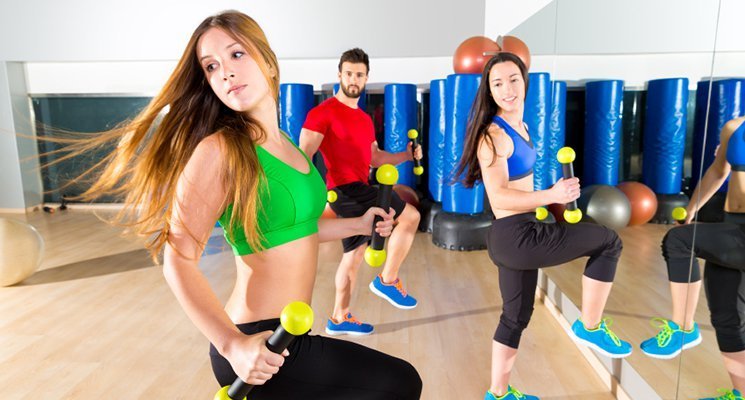
Looking for an easy, inexpensive way to freshen up your club, engage members, and create a viable non-dues revenue stream? Look no further than aerobic accessories. Club Business International magazine recently ran a great little piece about the advantages of relying on accessories to boost many aspects of your club’s offerings. It even described one Toronto-based club, Fitness Nation, which relies entirely on aerobic accessories as their training model, without offering a single cardio or strength machine. “Because these products offer so much value,” Marc Lebert, the owner of the club, told Club Business International, “they give startups, small operators, and personal trainers a lot of great choices for a modest investment.”
It’s not just startups, small operators, and personal trainers that can benefit, though: Larger clubs and sports facilities also can create innovative programs, find savings, and possibly ignite new revenue by incorporating aerobic accessories. The possibilities are nearly endless—and certainly endlessly versatile. With battle ropes, bodyweight trainers, kettlebells, medicine balls, slam balls, sand bags, gloves, grips, belts, wrist wraps, and a host of other accessories a club can incorporate, there are significant options for keeping members on their toes with new class offerings. Combining accessories in novel ways can result in exciting experiences for club members — ones that keep them coming back for more and spreading the word about your creative classes.
Another bonus, the article points out, is that new accessories involve a learning curve. They require proper instruction, and because of that they help foster engagement between trainers and clients. With engagement, clients are more apt to feel attached to their place of exercise, satisfied with their experiences, and ready to push themselves further. As Lebert explained to Club Business International, “The products have to be introduced with proper instructions, or you run the risk of [them] not being used.” To encourage instructional activity, Lebert’s club offers trainers online access to programming updates and other exercise content. Consider the possibilities for your own facility if you can offer relevant online content—perhaps to trainers and members alike—to promote the use of accessories.
Finally, the article points out that these accessories can provide clubs with a fresh revenue stream. Chanin Cook, the director of marketing at Harbinger Fitness, says, “It’s been proven that utilizing accessories in club programs boosts on-site sales, and instructors and trainers can exert tremendous influence here.” If you’re not already selling accessories, it may be time to consider doing so.
The takeaway? Incorporating aerobic accessories into your programming can benefit your facility, your clients and members, and the manufacturers who are constantly devising new and exciting products. It’s a win-win-win situation.

Bringing a Taste of the Retreat into Everyday Life

Bringing the Taste of a Retreat into the Everyday Life

« Blog | Written by ezfacility | | (0) Comments |

Luxury health-fitness retreats have become something of a trend. Perhaps some of your members have tried them, or maybe you’ve given one a go yourself. If not, you can imagine the drill: At a beautiful resort somewhere exotic or simply far away from it all, you and your fellow companions spend a week or so hiking twelve miles a day, taking yoga and weight-training classes, and working out for as many hours as possible, and you do it all on about 1,200 calories a day (luckily, many such retreats also feature massages and facials, so be grateful).
Don’t get me wrong—I think this trend offers wonderful opportunities to people who want to kickstart a fitness regimen or who love a good workout and want to combine one with a vacation. There are many reasons why I’d jump at the chance to go on a fitness retreat myself. However, there are also many factors holding me back, several of which have to do simply with practical limitations: time, money, child care.
That got me thinking. What I really need is a luxury health-fitness retreat here at home. I need a week-long or ten-day crash course in intense exercise and healthy eating right here where I live and work. Boot camps, of course, abound in New York City and throughout the country, but what I want is something even more focused and intensive—something that gives me a sense of total immersion while also offering me a chance to get things done. I wonder if there’s an opportunity here for the gyms and health clubs, a hole to fill. It might be worth considering whether there’s a flexible form of health retreat that you could offer members (and nonmembers too, as a way to invite them to join your facility).
I imagine something that begins early in the morning, soon after I drop my son off at the bus stop. A two-hour class could ensue, followed by a healthy breakfast. Afterwards, there could be a three- or four-hour break for participants to get work done or run errands (and possibly wi-fi and lounge/workspace made available to those who want it). Another two-hour exercise period could follow the break, with a light lunch afterward—maybe offered while nutrition or fitness experts offer talks on the best ways to carry the effects of the retreat over into the everyday life. For the afternoon, childcare could be on offer while another class takes place, and after, everyone could be sent home with instructions for dinner. Facials and massages could also be offered on select days. Follow-up sessions in subsequent months might be something participants could elect to take part in for an extra fee.
Many variations of that scenario are possible, and it’s especially worth dreaming up options that might better suit office workers. No matter what form a hometown fitness retreat takes, the benefits could be immense, and not just for participants: Your club could find itself with a new revenue stream. Plus, as alluded to earlier, it can be an effective way to draw in new members (prospectives who take part in the program could be offered a discount on first month’s membership, or the like).

Keeping Up Appearances, of Your Online Presence

Keeping Up Appearances

« Blog | Written by ezfacility | | (0) Comments |

Recently, here in New York City, I was helping a friend research options for a swimming facility. We visited Yelp.com, which, as everybody knows, is the place to go for the inside scoop on any and every business imaginable. A search on Yelp for “gym swimming pools” pulled up a long list of gyms, health clubs, and fitness centres that have pools. At first we were overwhelmed. Then we realized how easy Yelp makes it to weed choices out. Does it have less than four stars? Forget it.
That’s for starters. Once you begin reading the reviews, it becomes crystal clear which places are worth trying and which ones are better off ignored. For one club that received two stars, for example, we found the following reviews: “Limited availability for lap swimming and the club does not adhere to its weekly pool schedule,” “There have been lots of problems ranging from overcrowded, stinky locker rooms with broken lockers to lack of morning classes for people who work,” and, simply, “Horrible!”
The same gym had one highly positive review—but the negative voices drowned it out. This is all well and good for consumers. But what if you’re a gym owner, where your facility has a low rating, and comments are negative, even though you know you deserve better? The fact is, online customer reviews can make or break you. In order to ensure a healthy digital profile, one that won’t damage your chances of drawing in prospective clients and winning new members, you’ve got to take action.
The first step is to know what’s out there about you. Take a look at Yelp and other similar customer review sites (such as Angie’s List, the Better Business Bureau, Epinions, and Google+ Local). Are there reviews for your business? Keep in mind that having reviews is a good thing—just as negative reviews can have a negative impact, positive reviews can have a positive one. You want people to be able to find you on Yelp (if they can’t, they’ll wonder why you’re not there); you just want to control the impressions they form when they do. So take a look, hope you’re there, and read carefully through the reviews you find.
Now, here’s the thing: On Yelp and many other sites, you can respond publicly to comments that are posted. That’s right—you have a chance to set the record straight, and if you handle things graciously enough, you might be able to turn a negative review into an opportunity, a chance for the marketplace to see how reasonable, generous, and responsive your facility is. When my friend an I found a response to a negative review of a local gym, we were impressed: The response included an apology, an explanation, an assertion that the customer was right, and an offer to make up for the bad experience. We kept that one on the list of places to check out.
If a mere response feels inadequate to you, or if you’re overwhelmed by the number of customer review sites out there or the daunting task of keeping track of everything said about your facility online, keep in mind that there are companies that help you clean up your online presence. Reputation.com, Reputation Changer, Big Blue Robot, Metal Rabbit Media—these are just a few outfits that find ways to push potentially damaging online content further down in search result lists and pull positive materials to the top. Some of them are pricey, but when it comes to presenting your best face to potential customers, the cost may be worth it.

Become an Active Participant in Preventative Health Care

Become an Active Participant in Preventative Health Care

« Blog | Written by ezfacility | | (0) Comments |

Pomerene Hospital in Millersburg, Ohio, recently kicked off a deal to take over a local fitness center. The owner of the center approached the hospital, expressing an interest in a community collaborator. Seeing this idea as an opportunity to extend health care beyond its own walls, the hospital embraced it. Doing so, said Pomerene’s chief financial officer in a statement, is a first step towards aligning the hospital’s services with reform in the health industry—with the expanded focus to include a greater emphasis on wellness and preventative care.
I love this. It seems to me that all hospitals should run fitness centres, or at least partner with fitness centres to provide a more holistic set of health-related services. I feel this way about doctors’ offices too. I hate going to them partly because I resent the fact that I’m there in the first place. If I hadn’t gotten sick, or overstretched a muscle, or ignored the numbers creeping higher on the scale, then I wouldn’t have to be there. Sometimes, I am all too well aware of how prevention would have served me better than care.
Not all hospitals have the means or the resources to manage a fitness facility, and certainly not most doctors working independently. But they could at least actively take different approaches to encourage patients to focus on their own preventative care. They could give discounts on co-pays for patients who bring in a letter from a personal trainer, exercise instructor, or gym manager showing that they’ve worked out x number of times in the past month. Or, along with prescriptions, they could hand out certificates good for one free class at a local spin studio or for one free session at a gym. Hospitals, when they discharge patients who have the capacity to exercise, could give out vouchers for a free month’s membership at a health club. There are so many possibilities.
None of these can be realized, of course, if gyms, health clubs, fitness centres, exercise studios, and sports centres are not willing partners. The good news is that forming such partnerships could only be beneficial for businesses in our industry. Each certificate a doctor hands out or voucher a hospital gives away represents a potential new client. And new clients who find your facility through a health care professional or institution are ones that are likely to stay—a voice of authority is telling them loudly and clearly that there’s a link between how much they exercise and how healthy they stay. If nothing else, they’ll come to you to avoid having to go to their doctor or the hospital again.
If you haven’t already done so, maybe it’s time to start cultivating relationships with doctors and hospitals. Approach local ones with suggestions and offers; make it clear that you’re as interested in the health of the community as they are. That’s what the fitness center giving its management over to Pomerene Hospital has done. Honestly, I wouldn’t even need any incentives to join that fitness center; just knowing it’s managed by the same experts who understand my medical needs would be incentive enough.

Planning for Emergencies

Planning for Emergencies

« Blog | Written by ezfacility | | (0) Comments |

My son is eight years old, the age at which curiosity, acquired knowledge, and a total fascination with disaster scenarios come together beautifully and lead to all kinds of thought-provoking (and sometimes horrifying) what-if questions. What if the house blew up just as we were about to step inside of it? What if a tornado ripped through town unexpectedly while summer camp was in session? What if we went to watch a baseball game at Yankee Stadium and an earthquake happened in the first inning?
That last one gave me pause. What if an earthquake did happen during a baseball game? What if you run a sports facility or a recreation complex or, for that matter, a gym, health club, or fitness center and you’re faced with a major emergency? How do you prepare yourself? How do you even begin to think of something as massive, and as potentially devastating, as an earthquake?
Kevin Bryant, a senior facility manager for the Gordon Faber Recreation Complex in Hillsboro, Oregon (which boasts a 3,700-seat baseball stadium, a 7,200-seat football/soccer stadium, and six softball fields) addressed such questions in a recent article for Sports Venue Safety, a supplement to Athletic Business. Bryant has encountered a number of extraordinary situations at his facility: a drunk and belligerent spectator, drug-use by a semi-professional sports team in the locker room, lights going out during a stormy, night-time, high-school football game. None of these are on the scale of an earthquake, but they got him thinking about the importance of being ready should a major emergency occur.
In order to frame out a coherent emergency plan, including an evacuation strategy, Bryant and his team—full-time and part-time staff—engaged in a months-long effort. Starting with the simple plan they already had (and you no doubt have at least a simple one of your own), they called upon the expertise of police and fire first-responders, city staff, and school district personnel. They researched actual emergencies that had happened at other facilities, used virtual reality software, and good, old-fashioned brainstorming to imagine potential situations. At the end of the process, they produced a carefully crafted, solidly tested, emergency and evacuation plan.
Bryant offers some useful advice. The first step, he says, was getting practical training for all full-time staff so that, at the very least, everyone knows how to administer basic first-aid and everyone has some AED and CPR training. Whether you run a sports facility or a gym or health club, you’ve probably prepared key staff members for simple emergencies in similar ways. But it’s worth asking yourself whether you’ve trained enough staff and whether new employees need training. Do you have a plan for yearly refresher sessions?
After training, Bryant and his team made a list of the exact types of emergencies they might encounter at their facility and then researched preferred ways of dealing with those emergencies. They looked into bomb threats, critical operations shutdowns, fires in and outside the stadium, extreme weather situations (including, yes, earthquakes), medical emergencies, and even nuclear fallout. They outlined, among other things, what the immediate reaction to each type of emergency would be, who would be responsible for what, and how the city and first-responders would be involved. The take-away here is that different kinds of disasters require different kinds of responses. At your facility, you must have a specific plan for each kind, and all the players must be clear on their roles.
Once you’ve got your written plan, you need to start another round of training—this time stepping through the actual plan as if an emergency had occurred. Bryant’s staff went through a fire drill. On a day when there was no event, they pulled the fire-alarm, role-played responses, and then discussed how it all went. The exercise revealed the importance of communication in the midst of chaos, noise, and stress, and showed Bryant that, while a written plan is crucial, realistic training is the only way to get all players on board with how to manage an actual situation.
Another great thing about eight-year-olds is that they’re convinced they can overcome any disaster scenario they might have to face; when my son explains how he’s going to deal with the tornado-at-summer-camp, or any other similar situation, he always describes his own deeds of daring and his phenomenal, heroic triumphs. I love his confidence and optimism, but I always try to remind him that he has a good chance of succeeding as long as he has a carefully thought-through plan.

Planning for Wear and Tear

Planning for Wear and Tear

« Blog | Written by ezfacility | | (0) Comments |

It’s a sad fact of life—any highly trafficked building, sports clubs, gyms, health clubs, and fitness centres undergo a great deal of wear and tear in a short period of time. Cracks and chips in the tiles, dings and scratches on countertop edges, tears in the mats, streaks on the floors, and marks on the finish of doors are inevitable, and they happen much sooner after construction or renovation than you would expect or like. But there are some steps you can take to prevent damage and keep your facility looking, well, maybe not brand new, but at least younger than it really is.
1) Expect and plan for deterioration. Certain features of your facility will age faster than others, like the tiles, countertop edges, mats, and other things listed above. Toilet seats, showerheads, the pads on workout benches and machines, handgrips—these and other frequently used things are items you can expect to show wear and tear. And if you can expect it, then you can make plans to guard against it. Take efforts to predict which areas will suffer the worst by identifying high-impact spaces and observing changes in those spaces over time. Note how long it takes for items to begin showing damage and document the timeframe—along with repair and replacement costs—so that down the road you’ll know when you need to take action and begin purchasing new items.
2) Design your operating and capital budget to accommodate refurbishing on a regular schedule. Your annual operating budget should include room for small improvements and repairs, and you can use your budget to step up into larger capital remodeling projects. Like dining venues that use a 7- to 10-year agenda for overhauling their spaces, fitness and sports facilities should plan for regularly scheduled updates within relatively small timeframes. They should also consider renovations that will need to occur in longer timeframes, and plans for such renovations should be updated annually. The goal is to ensure that the look and function of your spaces will still be relevant in 15 years, 20 years, and beyond.
3) One thing you probably already can’t do without (and if you are doing without it, you should stop everything and get one set up immediately) is a personal service reference guide. This is a notated list of professionals who installed elements of your facility and designed its features. The myriad small details that go into putting a space together can get lost over time, and if you begin refurbishing a space, you might find information about those details crucial to your project. You’ll need to have at your fingertips the names of the engineers, subcontractors, carpenters, and electricians whose work went into creating the original space. When little things start to go wrong—breakers begin to trip, remote controls no longer work—this reference guide will be priceless. Include everything you can think of, down to the names of the carpet and tile suppliers. You’ll be really glad you did.
4) Another key strategy is developing a vigorous cleaning routine. Imagine your mother there everyday, asking whether you’ve cleared your dishes and put your things away, and then multiply that by a thousand. In any building, and especially a high-use facility, it’s the accumulated grime and grit that can lead to premature aging. Don’t rely only on standard custodial care; in a health club or sports facility, you need specialized housekeeping of particular areas. And you need it daily. Also consider the cleaning that can be outsourced to specialists: power-washing entryways, keeping windows sparkly, scrubbing tile and grout.
If you’re still in the planning stages, waiting for your facility to be built or renovated, there are other steps you can take too: choose materials made for high-impact use, select finishes that will be easy to clean, note warranties and product limitations. The main point is this: From the very beginning, you want to imagine how your facility should look thirty years from now; then work to make sure that it looks that way. And if there’s some wear and tear that’s unavoidable, consider that a sign that your facility is well-used and well-loved, and be glad.

Energy saving

You'll be Green with Savings & Sustainability

« Blog | Written by ezfacility | | (0) Comments |

Ah, summer. I love winter’s snow, I’m a sucker for the gardens of spring, and fall contains what will always be my favorite holiday (Halloween, of course), but for me summer is hands-down the best season of all. I love the salad-eating, outdoor-exercising, blazing hot energy of it all—the swimming, the relaxation, the air-conditioning.
I know that last item is problematic, and it’s part of a much larger issue. Air-conditioning creates a huge carbon footprint, and if employed without regard to sustainability and energy conservation, it can contribute devastatingly to environmental destruction. However, from a fitness or sports facility perspective, it’s indispensable. Yet, it’s not just summertime air-conditioning that creates challenges. Lighting, energy consumption, heating, material waste—all of these issues affect how you run your facility year-round, how much money you save or spend, and your impact on the environment.
One way to tackle all of these issues at once is to push your facility to achieve LEED certification. Being LEED—or Leadership in Energy and Environmental Design—certified means meeting certain standards in energy savings, water efficiency, indoor environmental quality, and CO2 emissions reduction. The cost of designing and constructing a building that meets such standards is high, as is the cost of improving existing buildings. Maintaining LEED-certified facilities also carries costs. But in the end, the savings associated with LEED-certification, financial and otherwise, make it more than worthwhile. So how do you go about achieving it?
First, adopt a “going green” mindset. Demonstrate your facility’s commitment to creating an environmentally sound space by getting all employees on-board with the notion. It’s crucial that your management team understands the specific goals and considers LEED-related issues in all decision-making processes; if you have a stated company mission and can make LEED-compliance part of it, all the better. Equally important is that your sales team recognizes the power of LEED as a lever for selling your brand. Potential members and customers will appreciate the knowledge that joining your club or attending your practice facility or venue helps minimize environmental impact, and in a competitive market, such a factor can be a crucial selling-point.
Next, to cover the considerable costs of building a new LEED building or bringing an existing one up to speed, consider gaining sponsorship or embarking on a partnership. Local waste companies looking to promote their recycling programs, cleaning companies that market green products, municipal agencies launching new fitness agendas, and businesses with specific, health-related objectives—these are just a few categories from which to seek out sponsors or partners. To find one that’s right for you, you’ll need to do some research, identify the needs and wants of potential partners, and design proposals that meet those needs and wants. Any proposal you come up with should detail how the image, mission, values, and/or green initiatives of the sponsor or partner align with those of your organization and highlight the value of the alignment.
Finally, think both big and small. Reconfiguring your facility to meet LEED standards is thinking big, and it’s a crucial step that involves a good deal of research, commitment, and investment. You also want to make simple changes that might be tiny in and of themselves, yet, add up to a big change, contributing to an environmentally sound approach to running your facility. Install recycling containers next to trash cans. Replace old drinking fountains with newer ones that allow for bottle refills. Consider ways you might be able to buy locally, stocking your juice bar with fruit from nearby farms and getting supplies from companies in your city or neighborhood. Offer discounts at your café for customers who bring their own drinking containers. Tie messages about personal health into ones about the health of the planet. Every little effort makes a difference, and will help make your facility a leader—year-round—in the sustainability movement.

Improve Your Community, Gain New Members

Improve Your Community, Gain New Members

« Blog | Written by ezfacility | | (0) Comments |

Earlier this month, the American College of Sports Medicine released its annual American Fitness Index, ranking the fittest cities in America (congrats to the top three: Washington, D.C.; Minneapolis, MN; and Portland, OR). Boston, a city that prides itself on spiritedness and strength, celebrated to find itself in the top ten. Pulling in at number nine, Boston got points for its high number of farmers’ markets per capita, its high percentage of people using public transportation, biking or walking to work, and its high number of playgrounds per capita. Yet one of the areas in which the city ranked lowest was in access to exercise.
That’s about to change. In May, the Executive Director of Boston’s Public Health Commission, Barbara Ferrer, announced the Boston Parks Summer Fitness Series, a three-month program offering free exercise classes in 18 parks throughout the city. Classes will include, among others, salsa dancing, yoga, tai chi, Zumba, and Zumba Gold.
When a community becomes more aware of healthy living and the role of exercise in improving health and making a brighter future, everyone benefits—including gyms, health clubs, fitness centres, and the like. It’s almost like free advertising for the services you sell. After three months of regularly using a similar service, some people are bound to come seeking your services when the program ends. I guarantee that some facilities in and around Boston will be signing up new members come the end of August.
Chances are, your city is offering something similar. Free, municipally-run, summer exercise programs have become something of a trend in the past five years or so. That trend will only continue to grow. But why wait for your city to do the work? Why compete with your city? Why not become an entity helping your community to get fitter—while introducing the community to the benefits and wonders of your particular facility? You don’t want the summer to end and new exercise enthusiasts going to the gym down the road. You want them coming to yours. Offering a free summer program yourself is a good way to get them to do so.
Of course, as with anything, you have to weigh the benefits with the costs. Still, even a limited program—say, one free yoga class or one free Zumba class per week throughout the summer—will bring new potential members into your club. Once they’re in there, they’ll see what else you have to offer. You’ll be helping the community get fitter, and they’ll be walking out the door with memberships. It’s a win-win opportunity. And who knows, maybe next year, your own city will end up in the American Fitness Index top ten.

The Right Hire For Your Gym

The Right Hire For Your Gym

« Blog | Written by ezfacility | | (0) Comments |

If you’re a fan of reality television, or even if you’re not, you have probably heard about the recent episode of Inside Job that featured New York’s David Barton Gym. Inside Job’s premise is that a company seeking to fill a position agrees to let the show’s producers select three candidates. Those candidates live together for a week and undertake challenges that supposedly reveal their worthiness for the job. A fourth person also lives in the house, someone already employed by the company who presents himself or herself as another candidate for the position. That person is the insider, reporting back to the CEO about the candidates and choosing one of them to recommend.
Well, that’s one way to hire an employee. For those of us who don’t have the opportunity to get to know job candidates quite so intimately before we hire them, we need other approaches. Since so many staff positions at a fitness center or sports facility involve direct interaction with members and clients, it’s crucial to hire carefully. Moreover, hiring is an expensive process; you want to get a good return on your investment.
What can you do to ensure you’re hiring well? To begin with, craft an excellent, clear, and precise job description. The more specific your description, and the more explicitly you define what you’re looking for, the better your chances of finding appropriate candidates. If you need a marketing person with social media experience, don’t just put, “Five years marketing experience”. It’s better to write, “Experienced marketing professional with social media expertise.” Also, be sure to stick in a few words that convey the sort of work ethic you’re looking for. If you want to scare off potential loafers, then change that wording to “Dedicated, experienced marketing professional with social media experience, a can-do attitude, and the willingness to stick it out when things get tough.”
Once you’ve collected your applications and narrowed the pool down to a handful of candidates, line up your interviews. Let me stress on the word “handful”: At this point, you don’t want to bring in too many people. Start with your top three or four choices; if you can’t find what you’re looking for among them, you can always call in others.
No doubt you’ve conducted interviews before, so you know the drill. Still, there’s one thing that’s easy to forget: Interviews are not effective if you’re focusing only on the science behind them — the questions you should and shouldn’t ask, how you read a résumé, what answers a candidate gives to your questions. More effective is to focus on the art of interviewing. This means paying attention to how a candidate answers your questions more than what they say. Did you get an answer — but not to the question you asked? Were there inconsistencies in the candidate’s replies? What was the candidate’s body language saying, what were the unconscious reactions and gestures? These will help you better understand who the person is (rather than just what he or she has done).
Once you make an offer, be prepared to negotiate. Any candidate worth hiring is probably going to come to you with a counter-offer. Remain open to the offer. Often, it reflects what the potential employee truly thinks he or she is worth. You might not be able to meet the counter-offer, but you might gain some clues about what alternative offers the candidate might be willing to accept. If you really want the person, you’ll have to find a way to make him or her happy.
Which brings me to my final point: Keep your employees happy. The gym and sports industries by nature face high turnover (how about a reality TV show that addresses that fact?). When you’ve invested the time, money, and energy to hire the right candidate, you want to do everything you can to make sure he or she stays. Create an open, warm workplace that makes relationship-building a priority. Recognize and reward good work. Consider perks such as tuition reimbursement, free lunches, and employee-of-the-month programs. The investment in human capital is worth it.